I am building anAI-native university.
Hanover, NH · April 2026 · Josué Godeme
Sub-Saharan Africa is short millions of teachers. Too many students still have no real access to education—not a weak school, but none. I believe in education. I have seen what it does when it reaches the right person at the right time. I am building an AI-native university because talent is everywhere and the teachers, the classrooms, and the infrastructure are not.
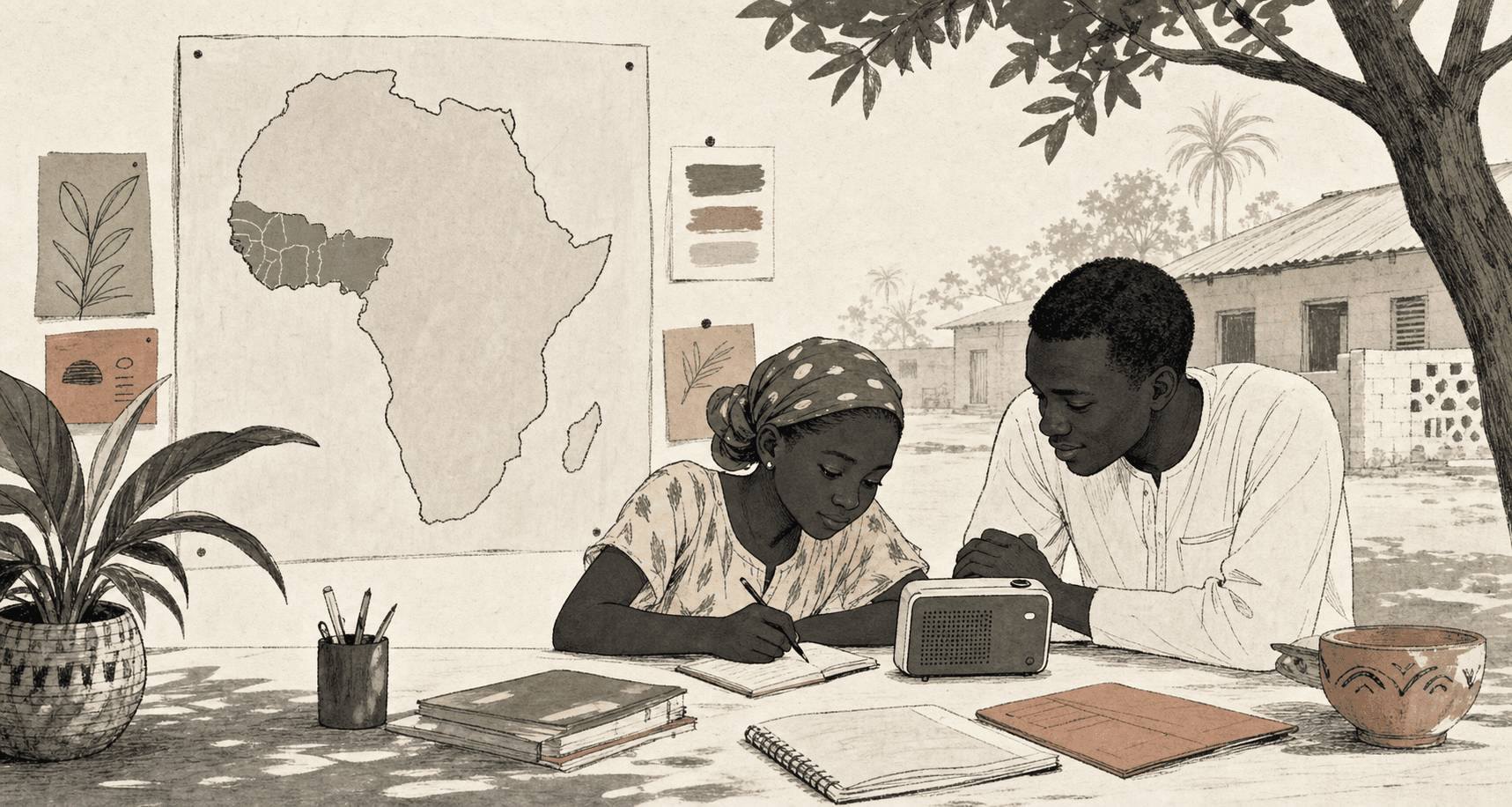
Let me give you a little context.
Personalized education is a loaded idea in the United States. I am not trying to win that argument. The place I am building for is different: Benin, West Africa, and much of Sub-Saharan Africa, where a student is often not choosing between a human teacher and an AI tutor. Many are choosing between some access and no access at all.
In the context I care about, the work is more basic than that. It is access. It is teacher training. It is infrastructure. It is giving an existing classroom, a learning center, or a small kiosk a tutor that can sit on a cheap device and work even when the internet does not.
Many children are already learning with too little support. I want to know whether AI can actually help a real student learn—not whether it sounds fashionable.
What I’m building
An AI-native university—but the first version is not a university in the traditional sense. It starts smaller: students around sixth to ninth grade, where weak foundations in math, reading, science, and language start to compound.
A student speaks. The tutor listens. It explains, asks questions, gives practice, and adapts—through voice, powered by edge AI on cheap hardware. The first prototype can start in English because that is the fastest way to test the tutoring experience and the offline setup. But English is not the destination. Once the core works, it has to move toward local languages. A student should learn in the language she thinks in, not the language the internet happens to support.
Where teachers and classrooms already exist, they stay central. Where they are absent, the tutor augments access—filling a gap that no hiring spree can close overnight.
What has to be true
- Language. Any product can start in English, but it cannot stop there. If the student thinks in Fon, Yoruba, Mina, Dendi, Bariba, or French mixed with a local language, it is crucial that local languages are integrated into this.
- Voice. Many students will not learn by typing into a laptop. They speak, listen, ask again, and deserve to be understood. That means voice interfaces powered by edge AI—fast enough to feel like conversation, not a demo.
- Knowledge representation. A clear picture of what the student understands, where they are stuck, and what a teacher, parent, or mentor should do next. That is what turns a chatbot into a learning system.
- Offline. No perfect Wi‑Fi. No always-on cloud. The tutor has to run on cheap hardware in a classroom, a kiosk, or a village with intermittent connectivity—because that is where the students are.
Why me
I grew up in Benin. I study at Dartmouth. I am going to Tsinghua next. Education has carried me across countries, languages, and institutions. I ranked first among about 80,000 students on my country’s national exam, and every major room I have entered since then has been opened by a scholarship. That shaped how I see education. Talent is everywhere. Access is not.
I have also already started on one of the hardest parts: voice systems for low-resource languages with many speakers and very little data online. Now the work is operational. How do you get this out of the lab and into the hands of students, teachers, and communities on the ground?
The vision
The end goal is autonomous learning spaces—places where students learn at their own pace, with high standards and real support, not lectures. Alpha School showed what is possible when you give kids that kind of room to move. I am not copying Austin into Cotonou. I am adapting the idea for Sub-Saharan Africa: voice-first tutors running on edge AI, on cheap devices, inside communities that already exist.
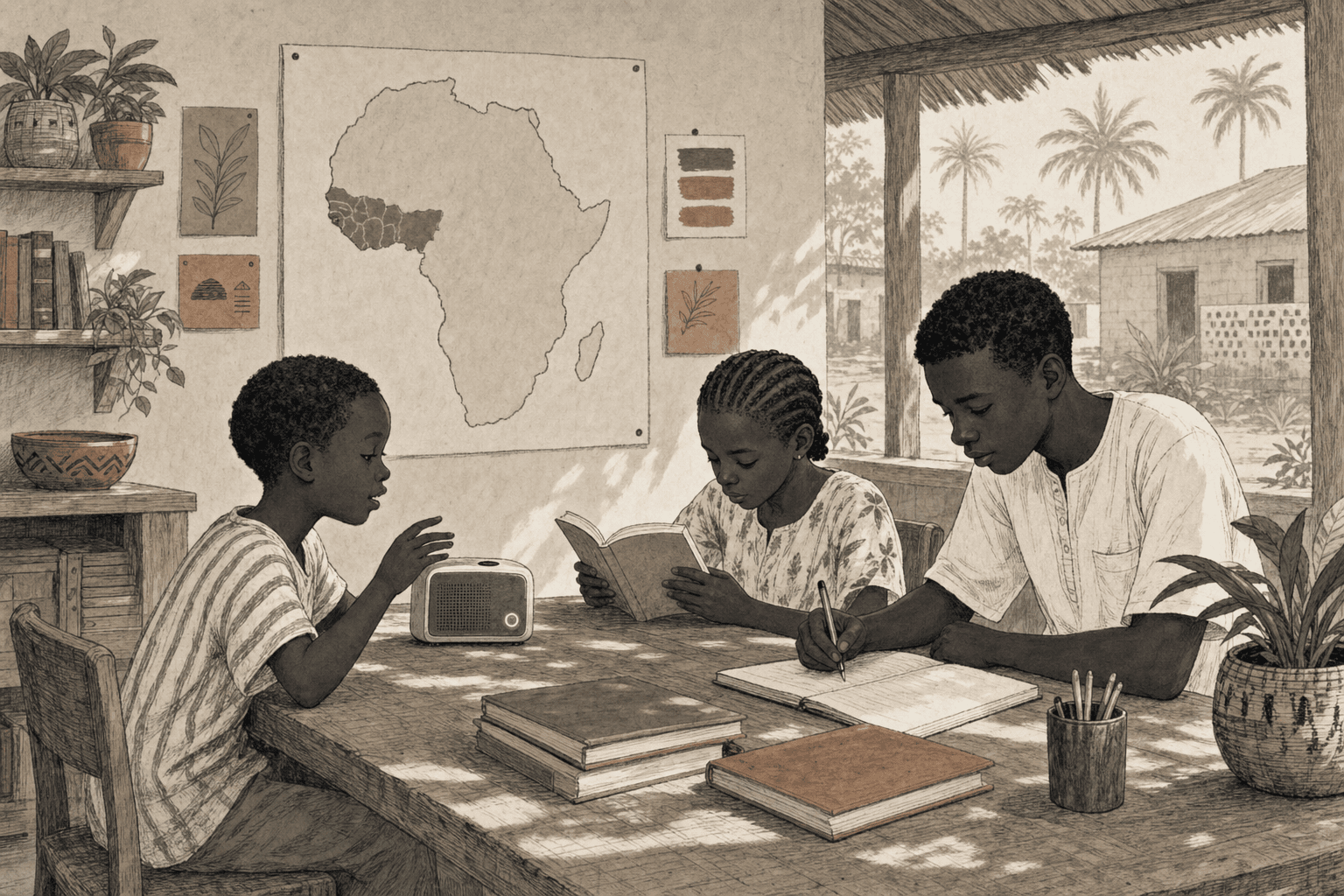
Sometimes on a student’s own device. Sometimes inside a cheap learning kiosk. Sometimes inside an existing classroom. The point is the same: autonomous spaces that bring the best education we can build to people who were never supposed to have access to it.
I believe in education. Sub-Saharan Africa is short millions of teachers. That is the work.
There are many ways this can fail. I do not know yet what the sustainable business model is. I do not want to pretend that part is solved. But I am willing to take that risk and figure it out in the open. If you are a teacher, a builder, or someone who cares about education in Africa, I would like to hear from you.
- Josué